Light pollution is one of the biggest growing concerns in todays world. Not just for astro-photographers, but for wildlife as well. Many different species rely on the night sky to navigate, and the effects of growing light pollution continue to disrupt their natural rhythm. For more information, please visit the International Dark Sky association!
Fortunately for us astrophotographers, there’s a huge range of filters available to help suppress different types of light pollution and isolate the wavelengths we want to capture. This light pollution is measured using the Bortle scale, Bortle 1 being zero artificial light pollution and Bortle 9 – somewhere like Tokyo or London City.
I live in a Bortle 5 zone. There are plenty of stars when looking up and it doesn’t seem like there’s any pollution. But taking long exposures without a filter leads to completely washed out images. This makes capturing details very challenging as all the pixels become saturated with unwanted light pollution!
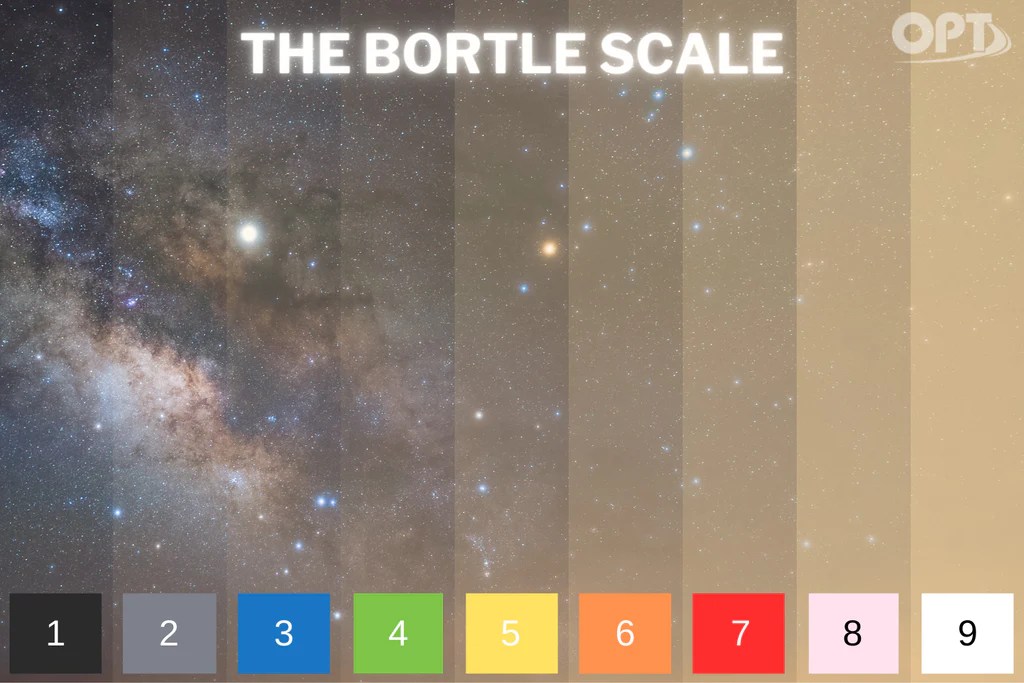
The Bortle Scale – Credit OPT Telescopes
In todays world light pollution is a growing concern. Filters used to be very effective against older style sodium lighting used in many cities. The trend towards LED lighting is making things much more difficult. LED street lighting broadcasts in broadband (almost every visible wavelength/white light) – meaning no one filter can block out all their pollution. Current LPS (Light Pollution Suppression) filters still do a great job at reducing their effects, but slowly, LED suppression filters are coming out such as the IDAS D2.
To mitigate the effects of light pollution when using my OSC camera, I use two different filters:
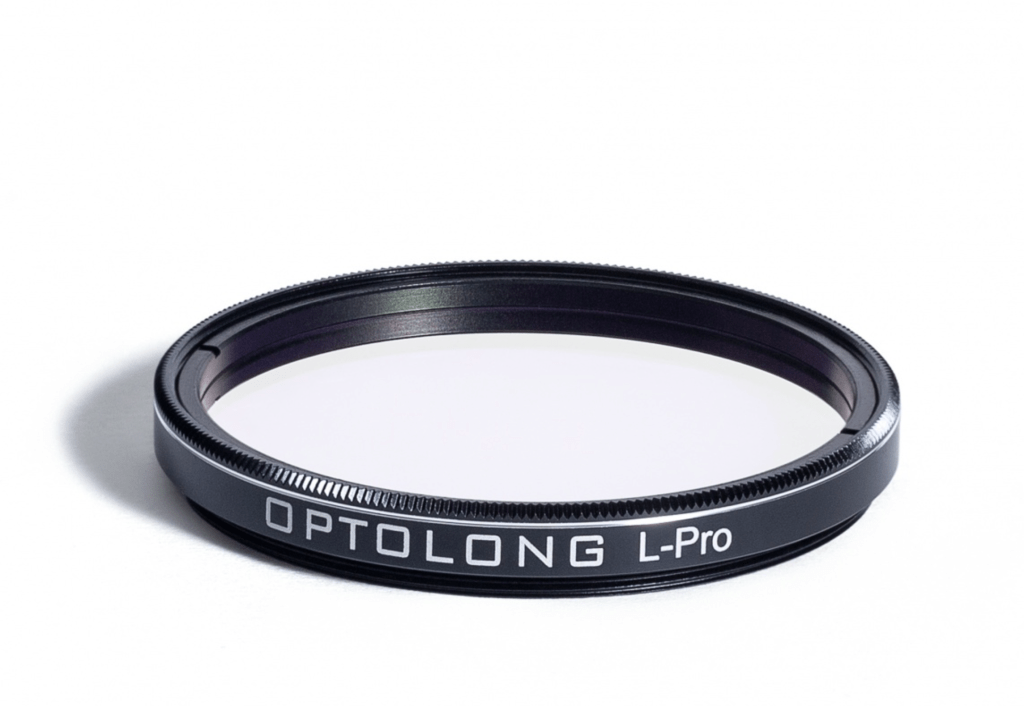
The L-Pro filter is designed to reduce the wavelengths from sodium light pollution. This filter is good for broadband targets such as galaxies – broadband targets are those that emit light across the entire electromagnetic spectrum.
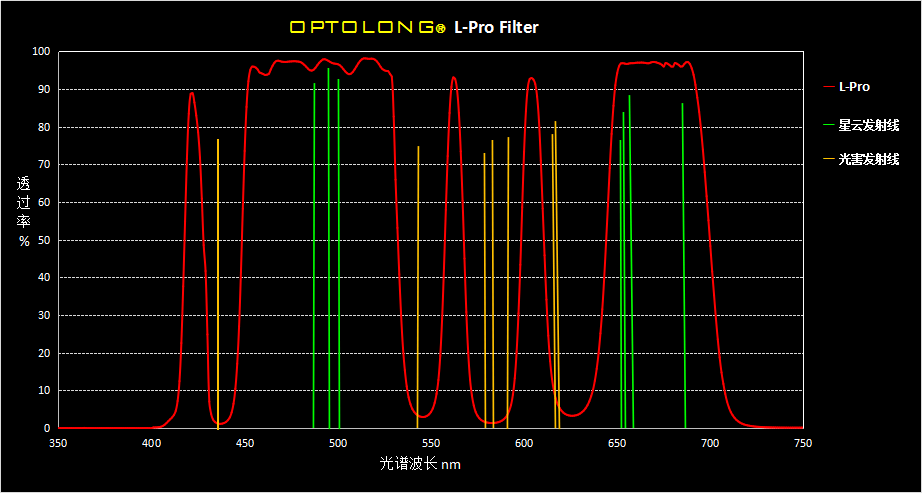
L-Pro Broadband Transmission Chart
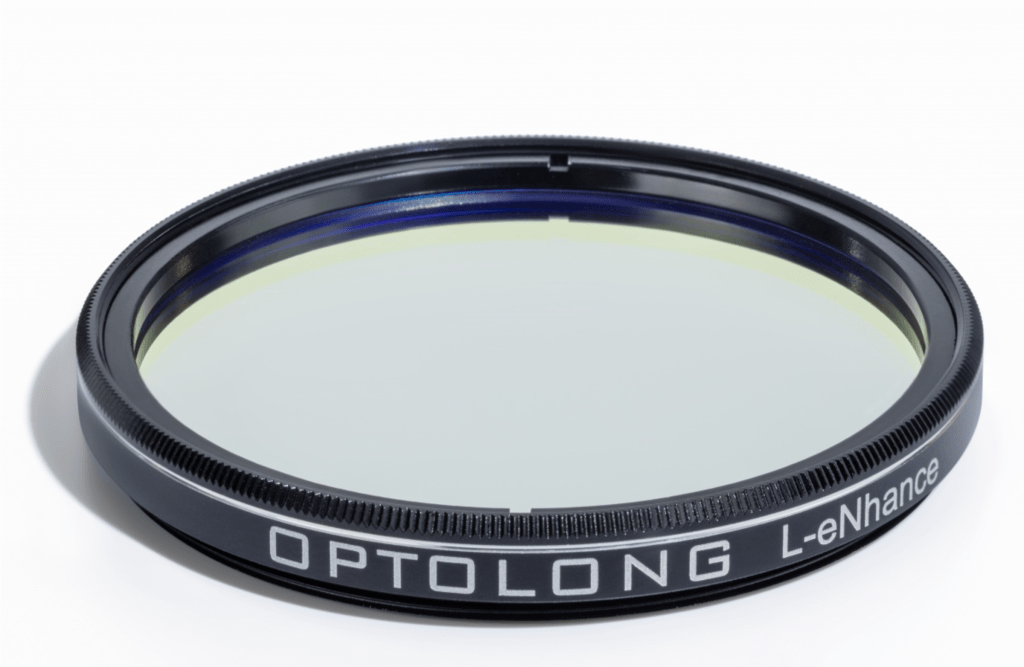
The L-eNhance filter is a narrowband filter. These types of filters are designed for emission nebula. These targets broadcast in 3 key wavelengths- HA, OIII and SII. Narrowband filters block out light pollution and isolate these wavelengths. This increases the signal to noise ratio making data processing significantly easier and results in a much cleaner and vibrant image with much better contrast and detail.
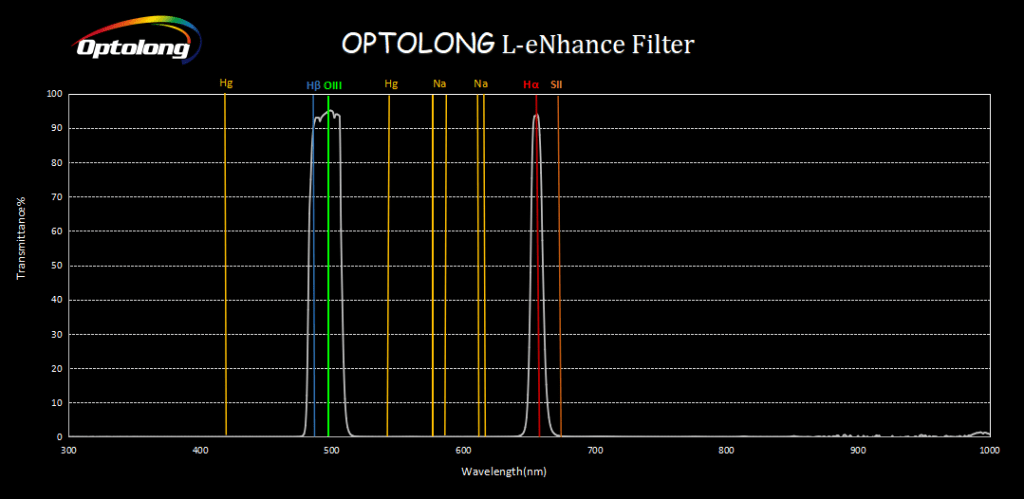
L-eNhance Narrowband Transmission Chart

M31 Captured using the Optolong L-Pro
Have a look at the image of M31 above. This was captured using the Optolong L-Pro broadband filter. Notice how the filter was able to maintain the colours of the stars! Broadband filters work by blocking wavelengths of typical sources of light pollution, usually sodium lamps, whilst still allowing most other wave lengths (like those emitted from galaxies) to pass through. If you were to use a narrowband filter on a broadband target like a galaxy, you would strip away most of the spiral dust lanes and arms, capturing only the very faint areas of hydrogen and oxygen – not ideal when you want to capture all the spiral beauty of something like M31!
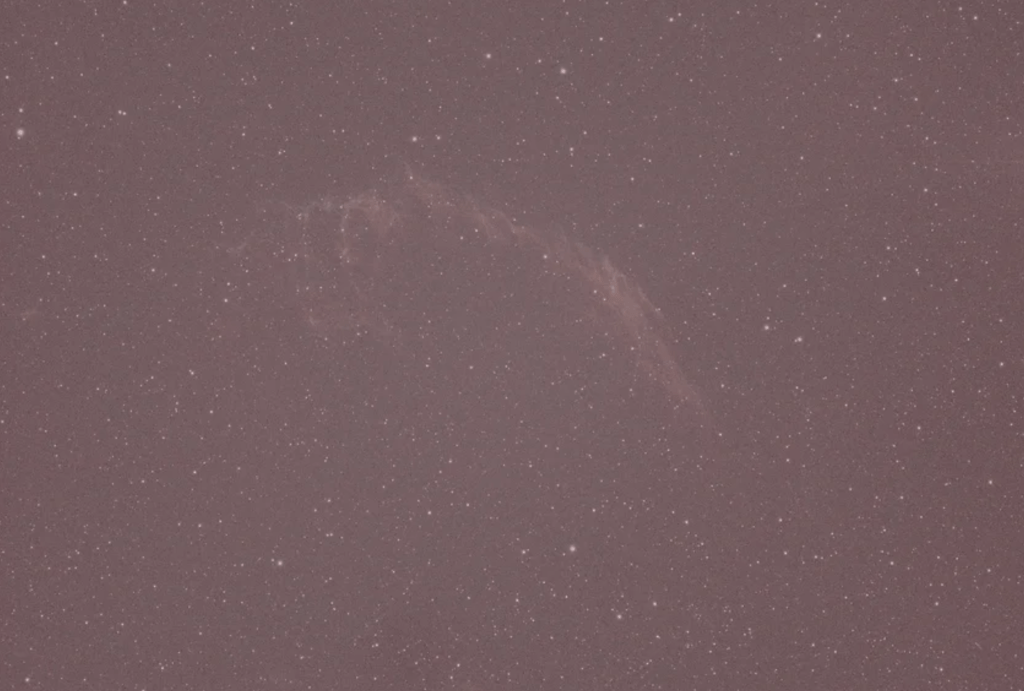
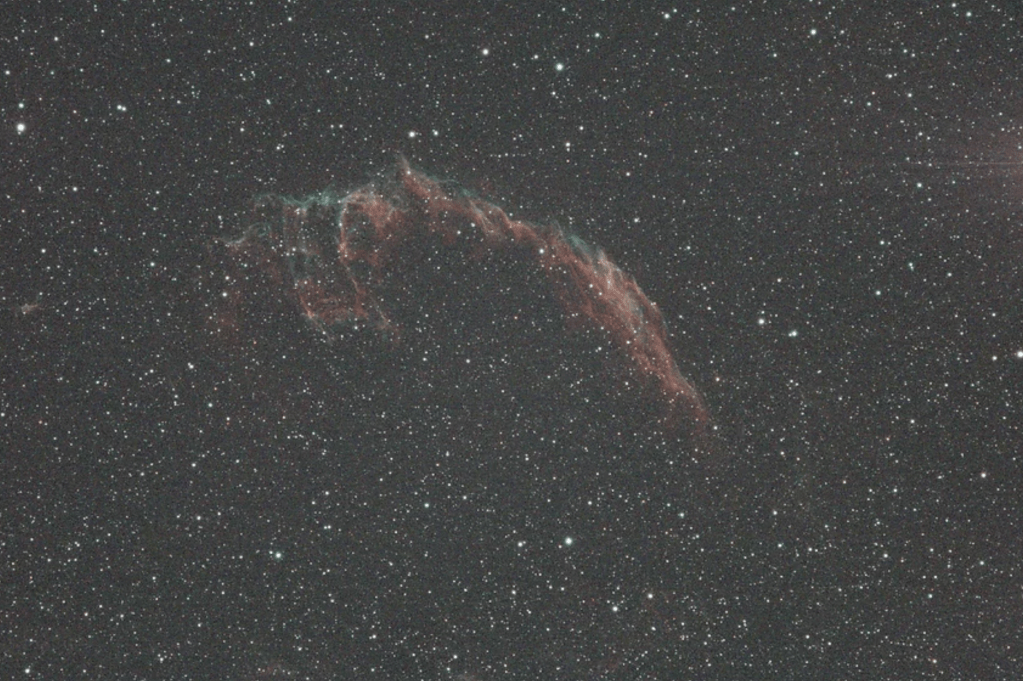
The images above show a single frame from the Eastern Veil. The Eastern Veil are the remains of a star that went supernova, dying a violent and explosive death. The supernova left behind a beautiful cloud of hydrogen and oxygen gas, forming a veil like shape, fluorescing in the universe. Note the improvement in contrast when using a narrowband filter. The reddish sky glow has been removed allowing the colours in the target to come through. A final image is shown below:
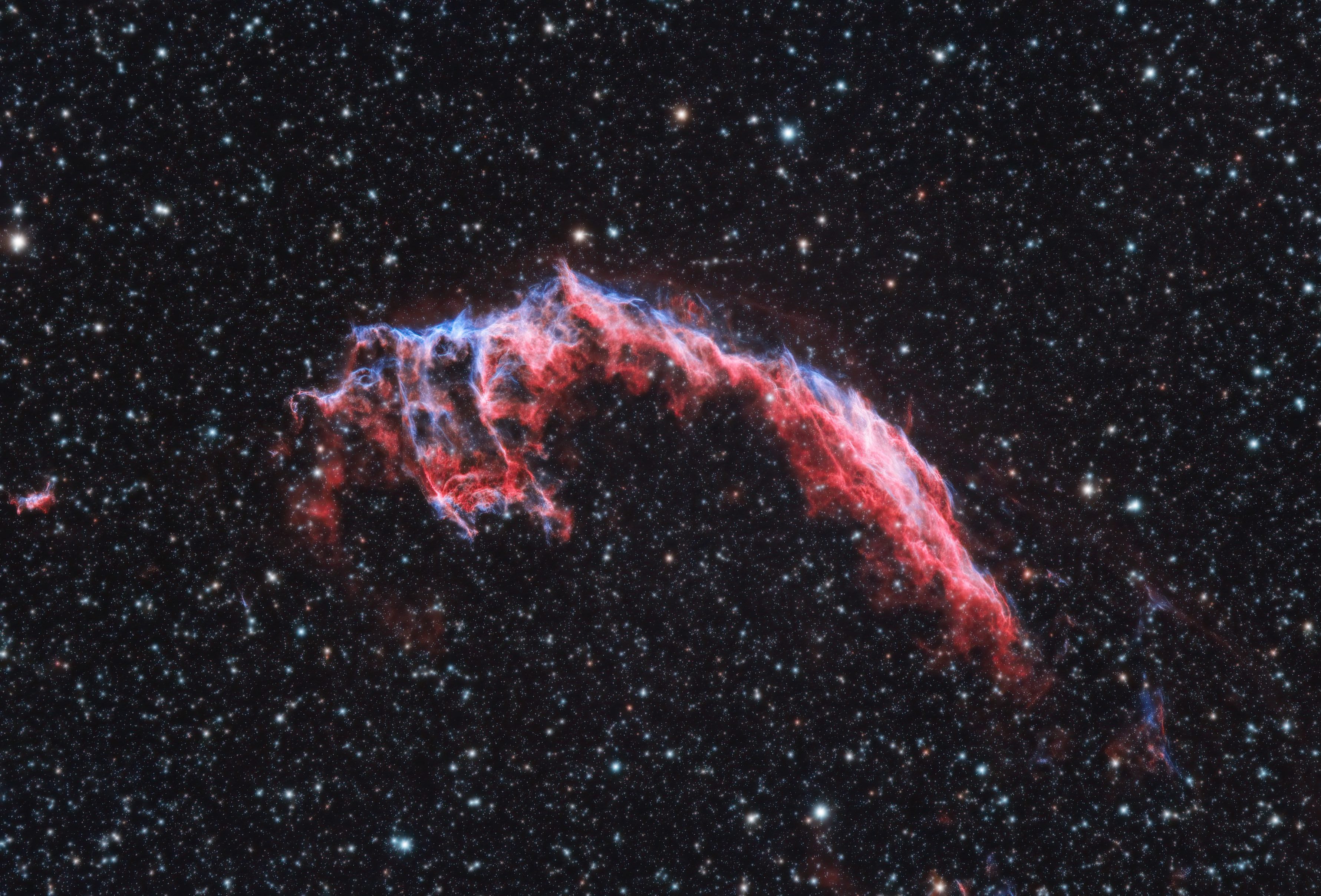
The Eastern Veil Nebula – 12 Hours using the L-eNhance Filter
 Ancient Canvas Photography